
The complete guide
A Practical Guide to Choosing a Boho Wedding Planner
When wedding notes start to spread
Wedding planning often begins with a few ideas and quickly turns into paperwork. A venue quote sits in your inbox, a florist's card goes into your bag, and the guest list lives on a loose sheet. Finding the latest decision can take longer than making it.
A wedding planner book gives those details a shared home. It does not make the choices for you, but it can make them easier to find and discuss. That matters when you are comparing costs or trying to remember what you agreed at an appointment.
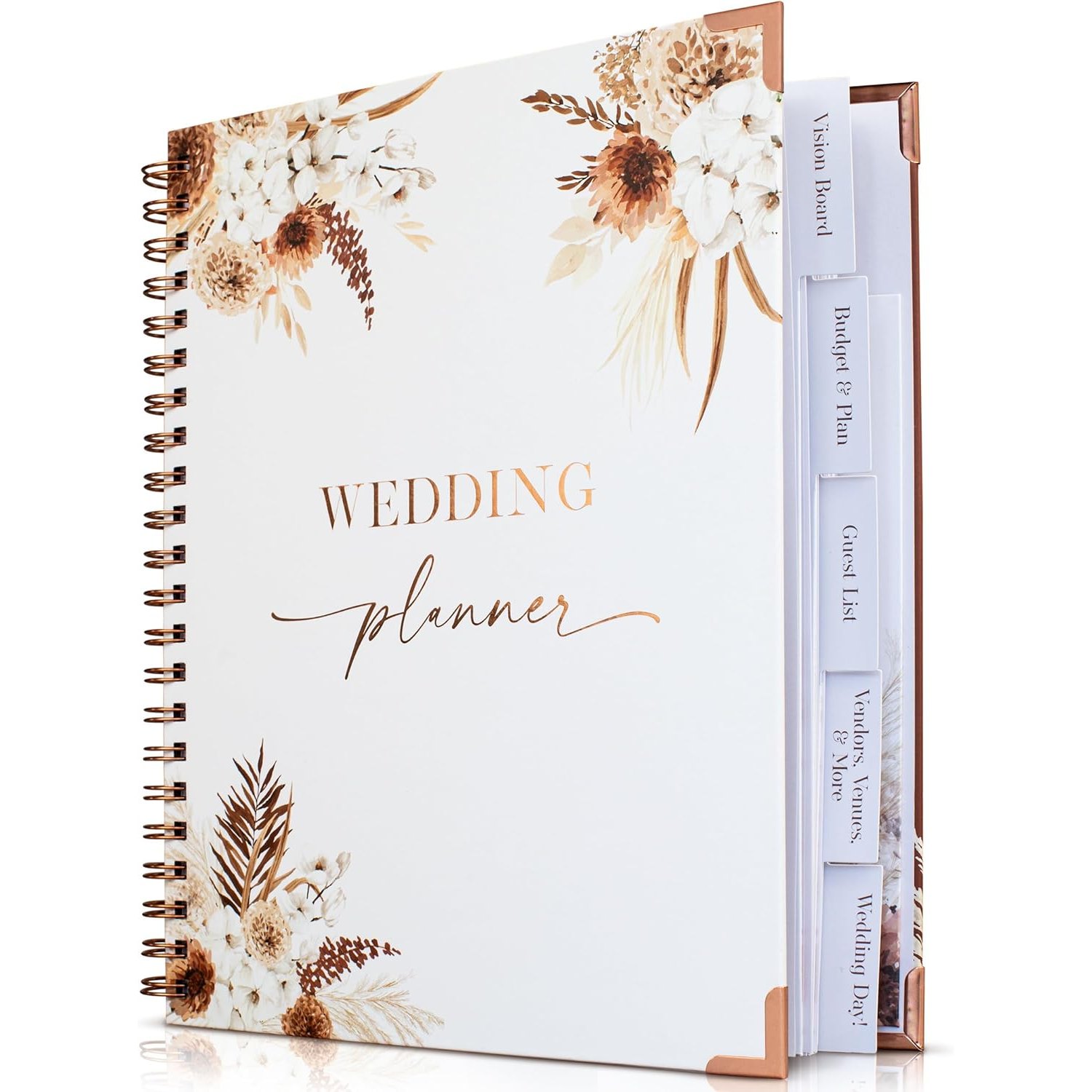
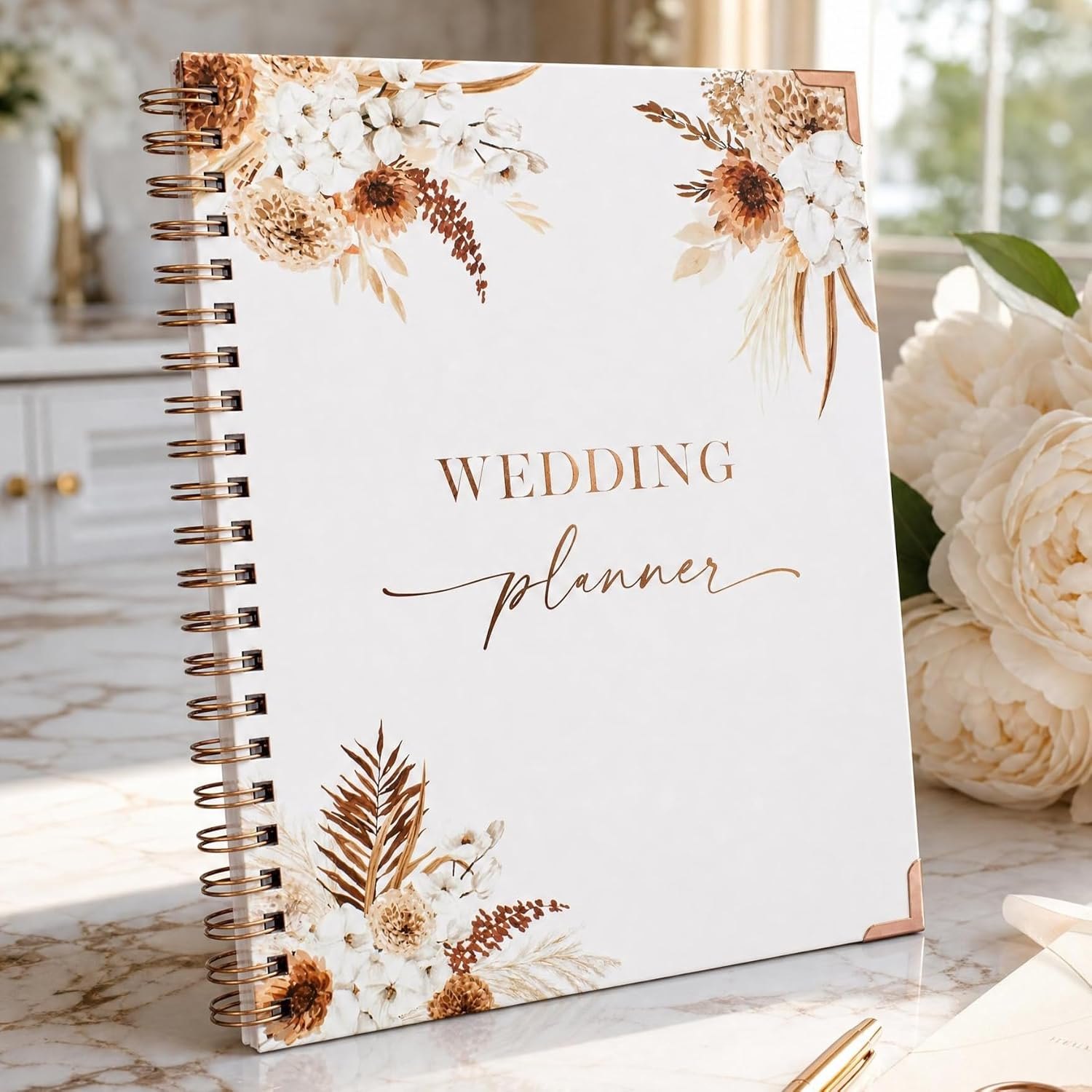
This boho wedding planner has 132 pages, themed tabs and pockets for loose references. It suits people who like to write things down and keep a physical record of their plans.
What this planner includes
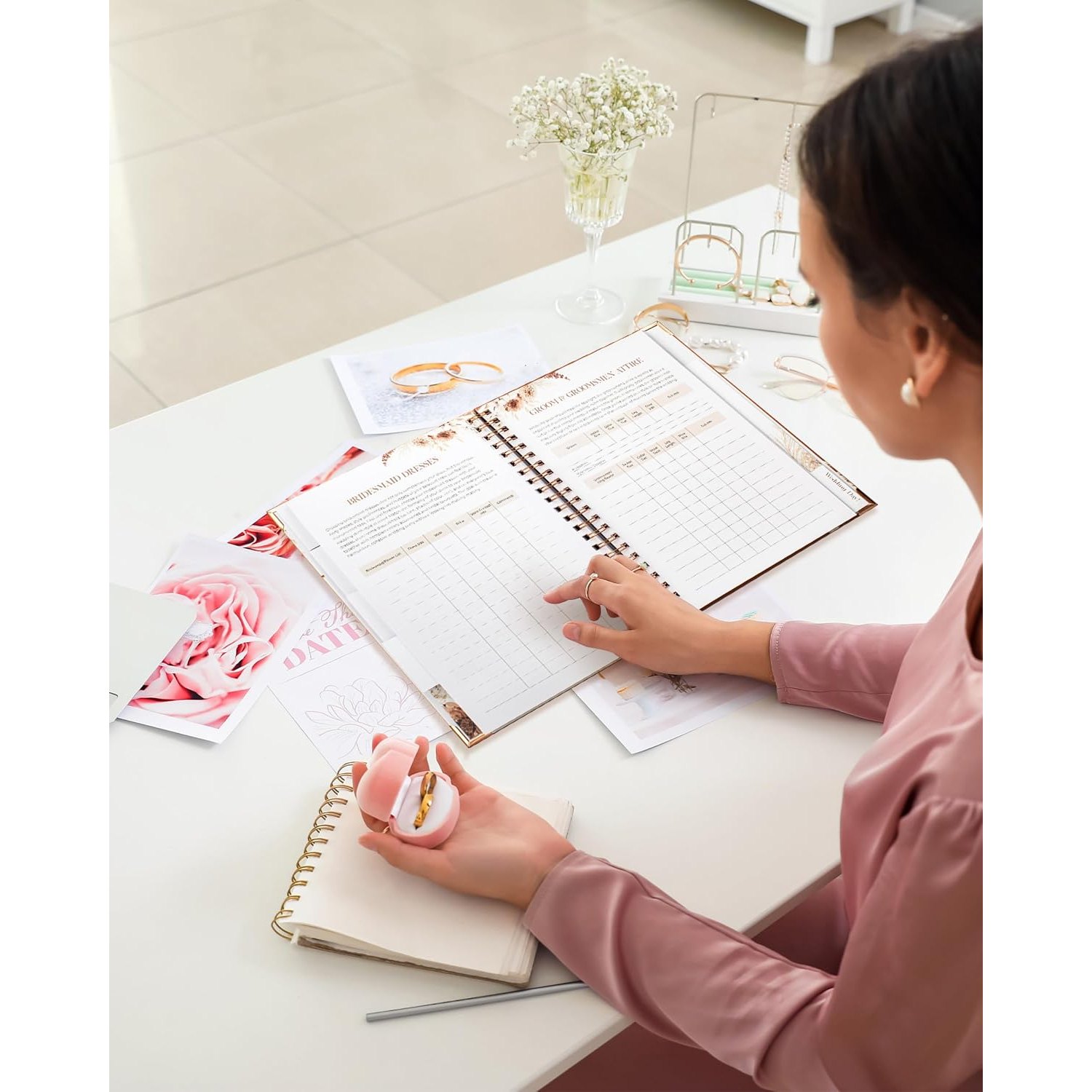
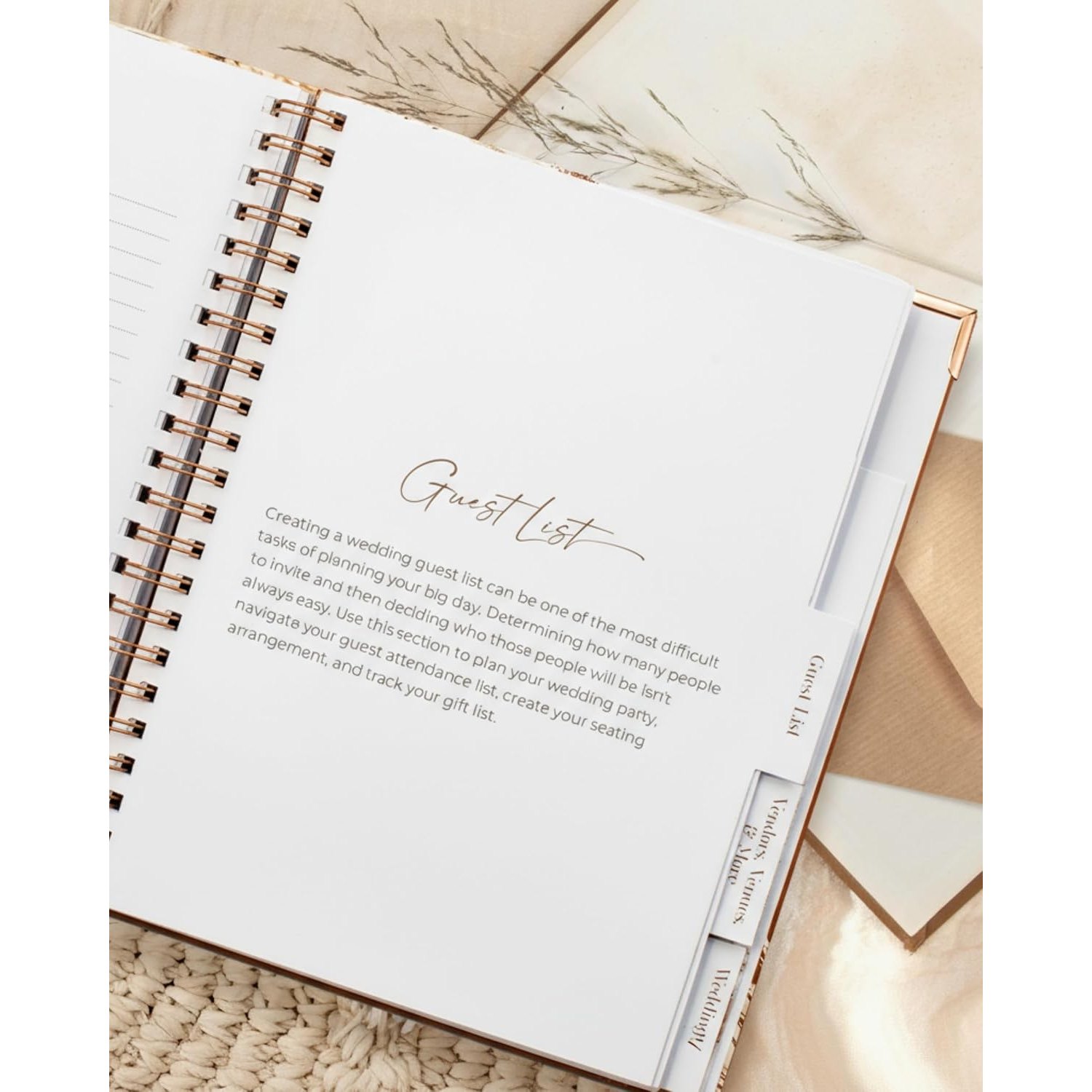
The book has sections for wedding vision, budgeting, the guest list, vendors and the wedding day. Those headings cover distinct jobs, from setting an overall direction to recording practical arrangements.
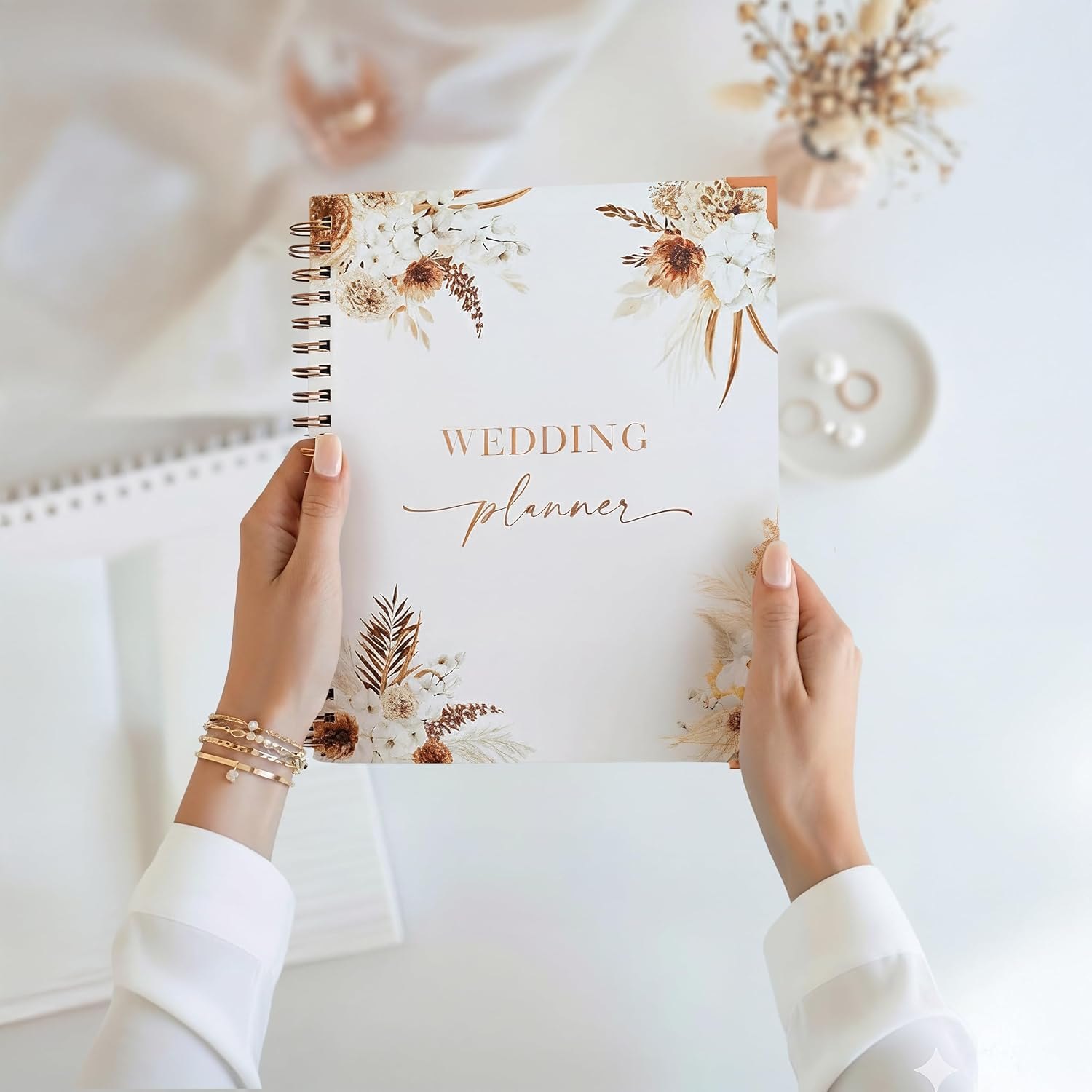
Its cover features pampas grass and boho flowers. Rose gold spiral wire and corner protectors are also listed. These are design details rather than a rule for your celebration. You can choose a pampas grass wedding planner even if your wedding will have a different look.
One planner is supplied. The listed material is paper, and no pens or other planning accessories are included in the maker's description. The number of pockets, paper weight and book thickness are not specified.
How the sections help you plan
A tabbed wedding organiser is most useful when each section has a clear job. Start with the wedding vision section to record what matters to you as a couple. You might note the atmosphere you want, the parts you care about most and the choices you have not made yet.
Use the budget section for money-related notes. Keep quoted amounts separate from confirmed costs so you can tell them apart at a glance. This is a suggested planning habit, not a claim about the printed page layout.
The guest list and vendor sections give people-related details their own place. The wedding day section can hold your notes about arrangements for the day itself. The exact prompts on individual pages are not stated, so do not assume a particular worksheet is included.
Decide whether paper fits your routine
A paper wedding planner works well when you enjoy writing during a conversation or looking back through earlier notes. You can take it to a meeting, turn to the right section and keep the discussion in front of you.
It is less suited to instant updates between people in different places. If you already share a digital calendar or spreadsheet, you do not need to abandon it. Decide which information belongs in each place.
For example, you could keep appointments in a shared calendar and use the book for meeting notes and decisions. The key is to avoid having two different versions of the same information. Agree on where the current plan lives.
Check the size before choosing
The listed size is 23 x 28 cm, and the item weighs 0.85 kg. Those details deserve a quick check before you picture carrying it everywhere. Measure the inside of the bag you normally use, rather than judging from its outside shape.
Think about what else comes with you to an appointment. A bag that holds the planner on its own may feel crowded once you add your everyday belongings. The book's thickness is not stated.
If you mostly plan at home, give it an easy-to-reach spot near your usual workspace. A wedding appointment notebook is more useful when you can find it before leaving, rather than searching for it at the door.
Make the budget section useful
A wedding budget planner is a place to record costs, but the habit behind it matters just as much. Update your notes after a quote changes or a booking is confirmed. Waiting several weeks makes it harder to remember which figures are current.
When comparing suppliers, write down what each price covers. Two similar totals may include different services or quantities. Keep the original quote available so you can check the details before making a commitment.
Do not treat a handwritten note as a replacement for a contract, invoice or receipt. Keep those documents safely and use the planner as your working reference. The maker does not state that full-size documents will fit in the pockets.
Keep guest and vendor notes clear
The wedding guest list organiser section can give your guest notes a consistent home. Decide how you will mark updates before you start. Clear handwriting and a simple system can save confusion when names or plans change.
There is no stated guest capacity for the book. If you need space for a large list, check the page layout before ordering rather than assuming it will suit every wedding size.
Use the wedding vendor organiser section to note questions before appointments and decisions afterwards. Dating your notes helps you tell an early conversation from a later agreement. If something needs confirmation, mark it clearly and check it with the maker.
Use the pockets without creating clutter
Loose papers are useful until they become a pile you cannot sort. The included pockets are described as holding magazine cut-outs, business cards and notes. They let you keep small references near your written plans.
Be selective about what stays in the book. Keep a cut-out if it explains an idea you still want to discuss. Remove old notes once you have copied any details you need and confirmed that nothing important will be lost.
Pocket dimensions and capacity are not specified. Avoid forcing bulky items into them or assuming they will hold every piece of wedding paperwork. A separate folder may be useful for documents that do not fit.
Share the planning with your partner
A bride and groom planner can be a shared resource rather than one person's task book. Set aside a short time to review open questions together. Bring the book so you are both working from the same notes.
Talk about priorities before filling pages with options. One person may care most about the meal, while the other wants more time with guests. Recording those preferences can help explain later choices.
You do not need to complete every section in order. Start with the decisions that affect what happens next. Return to the other sections as your plans become clearer, keeping confirmed arrangements easy to tell apart from ideas.
Choosing it as an engagement gift
An engagement gift planner is worth considering for someone who enjoys notebooks, lists and handwritten plans. It gives them a practical place to begin without choosing wedding decorations or a theme on their behalf.
Before buying, quietly check whether the couple already has a bridal planning book. Some people have a strong preference for a particular layout, while others would rather manage everything digitally. Their planning habits matter more than the cover design.
The boho artwork may appeal to someone who likes floral stationery. No personalisation service is listed, so choose it for the supplied design. Allow enough delivery time if you want to give it at an engagement celebration.
Care, delivery and returns
Keep the planner dry and away from food or drink spills while you work. Handle tabs gently and avoid overfilling the pockets. A soft dry cloth can remove dust from the cover without wetting the paper.
After the wedding, you can keep it as a wedding keepsake book. Its notes may record choices and ideas you would otherwise forget. Store it away from damp conditions and prolonged direct sunlight.
Delivery is available within Australia only. We dispatch within 2 working days, and delivery then takes up to 7 working days by tracked courier. Order well ahead of your wedding or gift date.
Change of mind returns are accepted within 14 days of delivery when the item is unused and in its original packaging. You pay return postage. Faulty or damaged items are put right under the Australian Consumer Law.
The short version
Choose this wedding day planning book if you want paper notes, themed sections and pockets together in one organiser. Its 132 pages cover wedding vision, budgeting, guests, vendors and the wedding day.
Check the 23 x 28 cm size and 0.85 kg weight against how you plan to use it. If a specific page layout matters, confirm that detail before ordering. The most useful planner is one you will keep close, update regularly and return to when the next decision comes along.