
The complete guide
A Practical Guide to Choosing Gold Foil Table Number Cards
Make the move from seating chart to table easier
A seating chart tells guests where they belong, but they still need to find that table in the room. When table numbers are hard to spot or do not match the plan, guests may have to stop and ask for help. A numbered card gives them a reference as they approach.
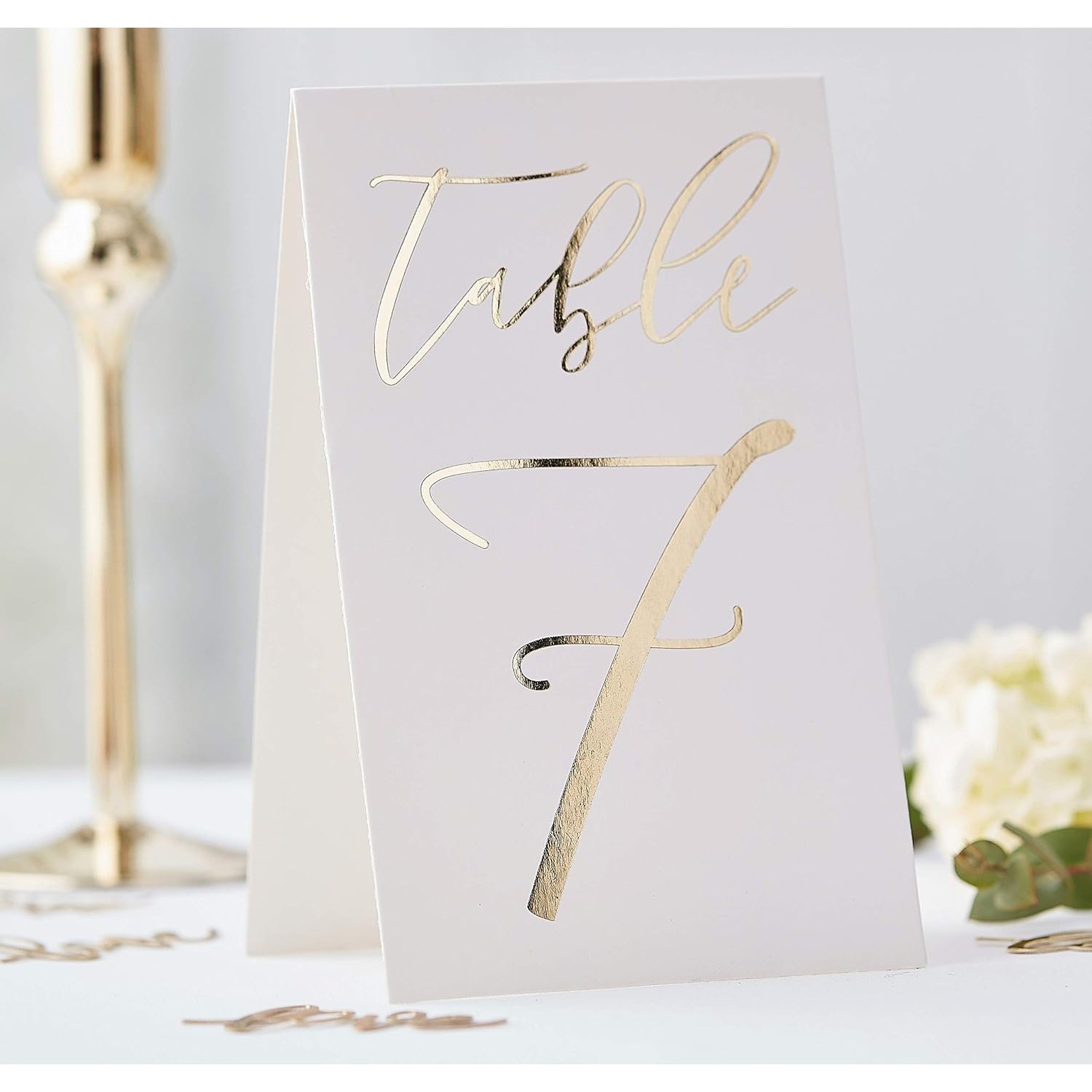
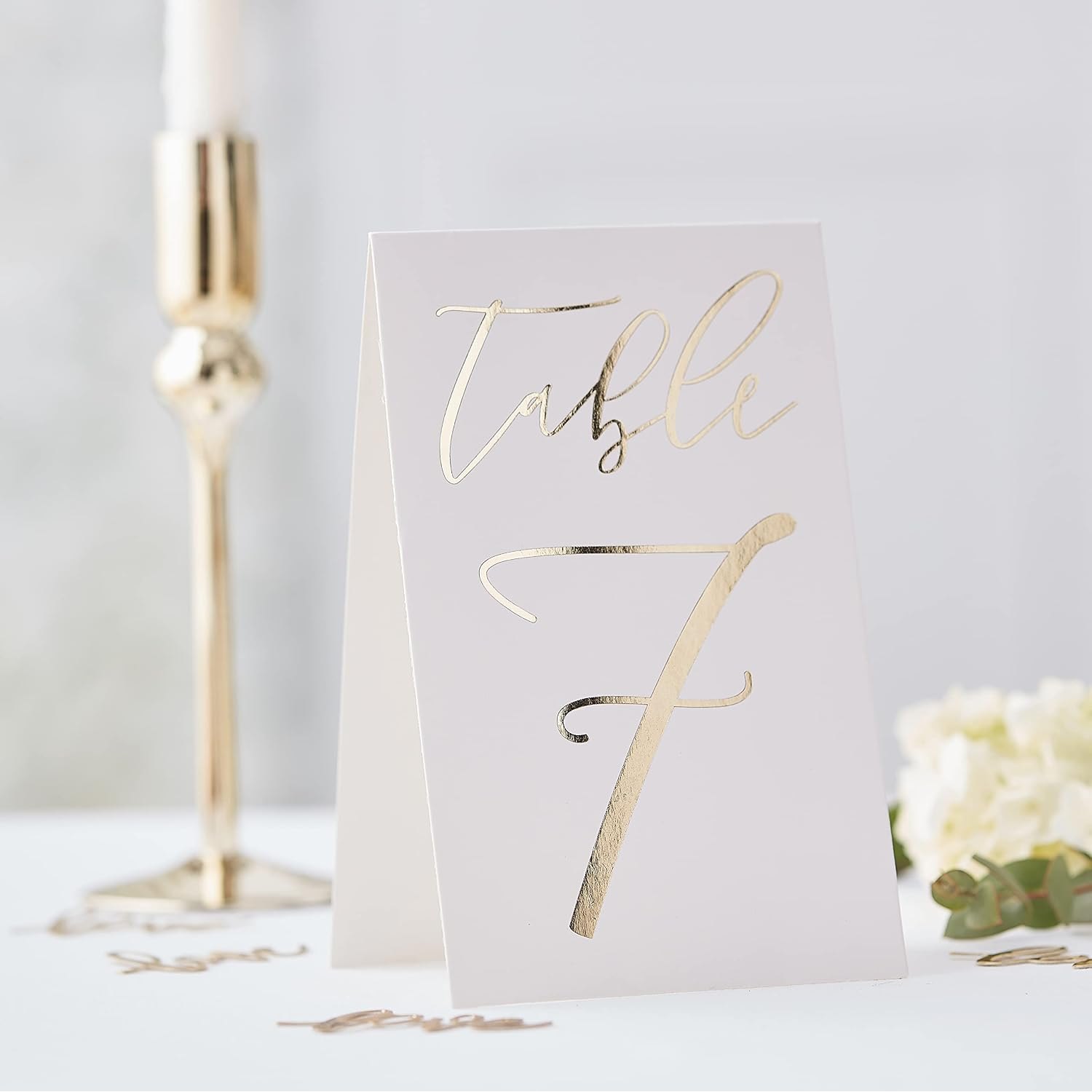
This Gold Foil Table Number Cards 12 Pack contains cards numbered one to twelve. The listed size is 18 cm x 11 cm, and gold is the listed colour. It is a defined set for a numbered table layout, rather than blank cards that need numbers added.
Before choosing any wedding table number cards, start with your seating plan. The right pack needs to cover your table numbers and work with the way you intend to display them. Appearance matters, but guests also need to be able to find and read the signs.
Start with the number of tables, not guests
Your guest count alone does not tell you how many reception table markers you need. The same number of guests might be seated across different numbers of tables, depending on the venue layout and your arrangements.
Count the tables that will need a number. This pack provides one card for each number from one to twelve. If your plan uses that range, the numbering matches. If you need numbers above twelve, this pack does not include them.
Also decide whether you want one number card per table or more than one. A second sign on a table would require another copy of the same number. Do not confuse a 12-card pack with twelve copies of a single number.
Keep other tables in mind too. A gift table or cake table may not need a numbered marker at all. Work from the actual seating layout rather than counting every table in the room.
How the cards work with your seating plan
The system is simple. Your reception seating plan assigns a guest to a table number, and the matching card identifies that table. The benefit comes from keeping those two pieces of information consistent.
For example, if a guest is assigned to table six, there should be a card showing six at that table. A last-minute layout change can create confusion if the cards are moved but the seating chart is not updated.
Before the reception, ask one person to check the chart against the room. They should compare every numbered table, not just count the cards. Twelve cards placed on twelve tables will not help if two table positions have been swapped.
These are table number cards, not individual place cards. If you want guests to sit in particular seats, plan separate name cards or another seat-level system.
Check what 18 cm x 11 cm means for your setup
The listed card size is 18 cm x 11 cm. Use that measurement to judge how much space the card may take within your table display.
A useful planning step is to mark out an 18 cm x 11 cm rectangle on plain paper. Place it beside your planned centrepiece, menus and glasses. This will help you picture the scale, although it will not confirm the product's thickness, finish or display method.
Avoid judging size from a styled photograph alone. Other objects in an image can make a sign appear larger or smaller than expected. Measurements offer a better starting point.
The listed item weight is 58 g. An individual card weight is not provided, and weight alone does not establish whether a display will remain stable. Check the complete arrangement with your venue before the day.
Decide how you will display each card
The maker does not specify whether these cards stand on their own. It also does not list holders as included. Plan the support method separately rather than assuming the pack contains everything needed for an upright display.
If you already own holders, compare their requirements with the listed card size. Thickness is another part of fit, and that measurement is not stated by the maker. A holder that accepts one type of card may not accept another.
Ask about any detail that would change your buying decision before ordering. This is especially useful if your display relies on a narrow slot, a clip or a particular card orientation.
Once the cards arrive, test the actual combination. Set up a complete place setting nearby so you can see whether the number is hidden by other items. A trial on an empty table can miss problems that appear once everything is in place.
Choose placement from a guest's point of view
A table can look balanced from the seat while being hard to identify from the aisle. When testing wedding table signs, walk towards the table along the route guests are likely to use.
Look for anything that blocks the number. A centrepiece, menu or other decoration may sit between the approaching guest and the card. Moving the sign a short distance could make the table easier to identify without changing the whole arrangement.
The reverse-side design is not specified. Do not plan on the number being visible from both sides unless you have confirmed that detail.
Think about the room layout as well as the table itself. If people can approach from several directions, ask the venue how they usually position table markers. Their advice can help you test a layout, but it does not replace checking the actual cards and supports.
Work gold detail into the table setting
Gold foil table numbers can provide a repeated gold detail across numbered reception tables. That gives you one point of reference when choosing the rest of your table setting.
You do not need every item to be gold. Consider how the cards will sit beside your existing table linen, stationery and centrepieces. The aim is to make the number easy to pick out while keeping the overall setting comfortable to look at.
Exact colour matching with separate gold reception decorations is not confirmed. Different products can have different tones and finishes, so avoid assuming that two items described as gold will match exactly.
Only the numbered cards are listed in this pack. Flowers, candles, table linen and other styling items need to be planned separately. Keep that distinction clear when setting your decoration budget.
Know which details still need checking
The brief gives the number range, pack count, colour, size and listed item weight. It does not state the base material, card thickness or country of origin.
Those gaps matter if your plans depend on a particular construction or finish. For instance, a display slot may need a known thickness. An outdoor arrangement may need weather-related details that are not provided by the maker.
No waterproof rating, wind resistance or outdoor suitability is stated. Speak with your venue before planning an exposed display, and do not treat gold foil as evidence of weather protection.
There is also no listed personalisation service. Choose this pack for its stated numbers one to twelve, rather than planning on custom names, wording or extra numbers being supplied.
Keep setup simple for the person helping
The person placing your numbered table cards may not be the person who created the seating plan. Give them a clear room plan that shows where each numbered table belongs.
Store the cards together until setup, then check the sequence before handing them over. This is an easy time to notice a missing or misplaced number while there is still time to sort out the plan.
If you change table positions, update the setup instructions too. Avoid relying on a spoken change that only one helper has heard. A clear final plan gives everyone the same reference.
After placement, do a last walk-through from the entrance. Read the seating chart, choose a table number and follow the route a guest would take. Repeat from another approach if the room has more than one entry path.
Care for the cards before the event
Keep the cards flat in a dry place before use. Choose a storage spot where other wedding supplies will not bend or crush them.
Handle them with clean, dry hands, especially during a setup that also involves food or flowers. Keep drinks and damp items away from the cards while you arrange the table.
The material and cleaning requirements are not specified, so avoid soaking them or applying cleaning sprays. Preventing marks is a safer approach than assuming the surface can be washed.
Keep the original packaging while you check the order. If you decide the pack does not suit your plans, unused condition and original packaging are part of the change of mind return requirements.
Allow time to receive and check your order
Delivery is available within Australia only. We dispatch within 2 working days, and delivery then takes up to 7 working days by tracked courier.
Order well ahead of the wedding date. Leave time to open the pack, check the numbers and test the cards with any separate holders. Receiving the order is only one step in getting the table display ready.
Change of mind returns are accepted within 14 days of delivery if the item is unused and in its original packaging. The customer pays return postage. Faulty or damaged items are put right under the Australian Consumer Law.
The short version
Choose this pack if your plan calls for gold table numbers running from one to twelve. Check the listed 18 cm x 11 cm size, confirm how you will support the cards and allow time for a trial setup.
Keep the seating chart and table positions consistent. A well-placed number card has a straightforward job: helping each guest find the table assigned to them.