
The complete guide
A Practical Guide to Sage Green Ribbon Place Cards
Give every guest a clear place at the table
A seating plan only helps if guests can tell which place is theirs. Once the tables are set, a small name card gives each person a clear point to look for. It also lets you carry a colour choice through the table without adding a large decoration.
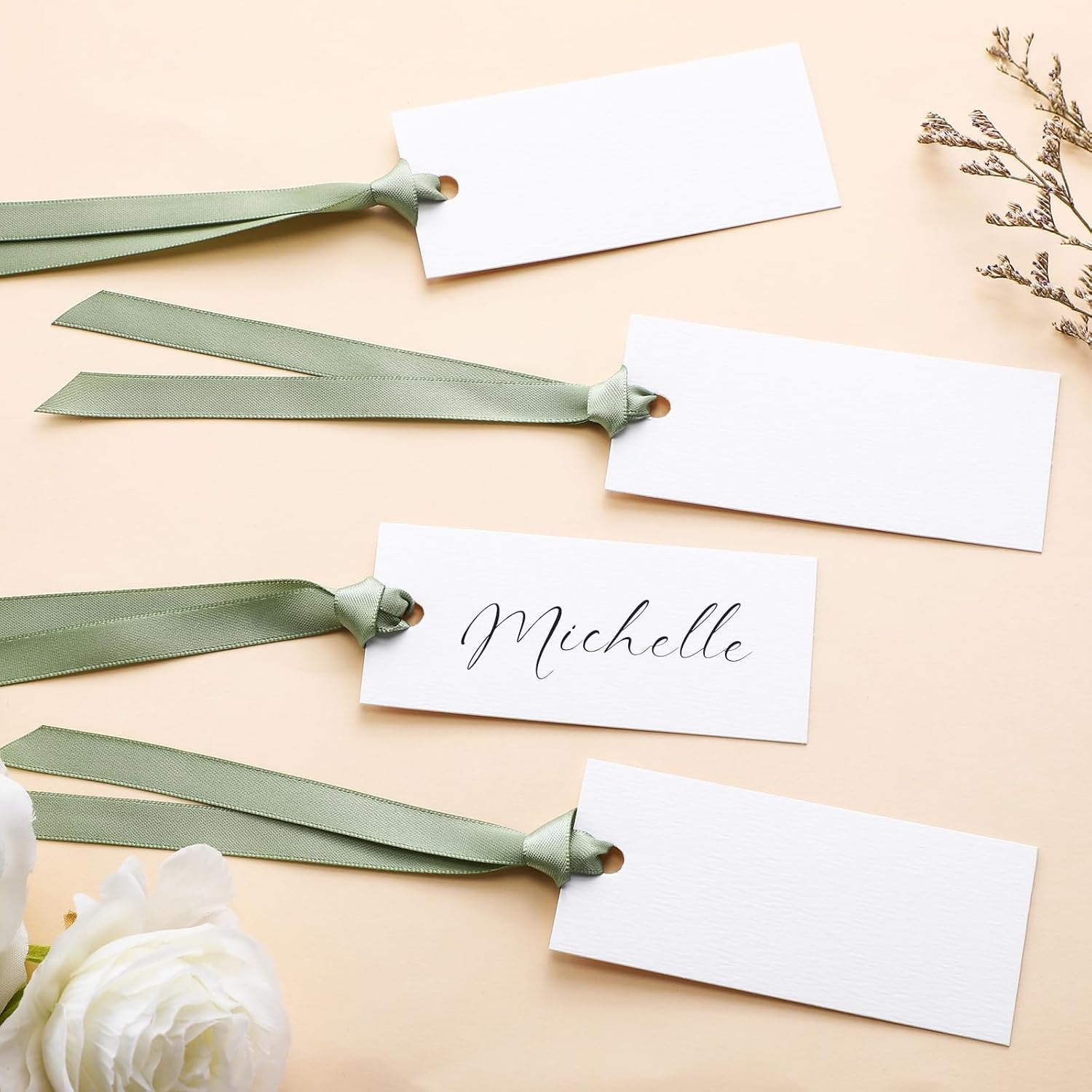
These sage green ribbon place cards pair white textured paper with a coloured satin ribbon. The cards are blank, so you write the names yourself. Each pack contains 50 cards and 50 pre-cut ribbons.
The main choice is practical. Do you want to prepare your own names, and does the card size work with your setting? Start there before deciding how to arrange the ribbons or what handwriting style to use.
Know what is in the pack
The cards themselves are white. Sage green describes the ribbons, which is worth noting if you are looking for green paper stationery. The white textured surface and sage ribbon are separate parts of the finished look.
Each card measures 1.57 x 3.54 inches. Each ribbon is approximately 11.8 inches long. There are equal quantities of both, so you have one ribbon for each card.
Only these cards and ribbons are included. You will need your own writing tool, along with any gifts or table items you want to use beside them. Do not plan around decorations shown in a styled setting unless they are listed as part of the pack.
Paper thickness, ribbon width and the satin fibre composition are not specified. If one of those details is essential to your plans, ask before ordering rather than guessing from a photograph.
Start with your guest list
Count the names you need before choosing your pack quantity. One pack provides 50 cards when you use one card for each guest. A guest list above that number will need more than one pack.
Then think about other uses. You might want paper name tags for gifts as well as a card at each seat. Those are separate cards unless the same tagged gift will serve as the place marker.
Leave room in your planning for handwriting tests or a name change. How much extra you need depends on your event, but using every card in your first count leaves no spare space for a mistake.
A final guest list is useful, though you do not need to delay every task until it is ready. You can check your layout and test your writing style while waiting for the last names to be confirmed.
Check the size in a real table setting
Measurements are easier to judge when you can see them on the table. Cut a piece of scrap paper to 1.57 x 3.54 inches and set it beside the items you plan to use.
Look at it from a guest's position. Is there a clear place for the name? Will the card sit away from spills? Does a nearby menu or folded napkin hide part of it?
This check also helps you judge how much text to include. A first name may need less space than a full name with a long surname. If two guests share a first name, decide how you will distinguish them before writing the whole set.
A folded, self-standing format is not specified. Do not assume these wedding table name cards will stand like tent cards. Plan their placement around the actual card rather than an unconfirmed display style.
Choose a clear handwriting style
The blank cards can be written on with a pen, marker or pencil. The choice comes down to the look you want and how the writing behaves on the textured paper.
Test one card before completing the set. Check whether the letters stay clear and whether the marks dry without smudging when handled. No particular pen brand or ink type is specified for these cards.
Write a few of your longest guest names first. This gives you a better guide to letter size than starting with the shortest name on the list. Keep the spacing readable rather than trying to fill every part of the card.
Handwritten place cards do not need elaborate lettering to do their job. A steady, simple style can be easier for guests to read. If someone else will help, agree on the name format so the set stays consistent.
Use the ribbon with a plan
The satin ribbons arrive pre-cut at approximately 11.8 inches each. Before preparing every card, try the tie arrangement you have in mind with one ribbon.
The amount left after tying depends on what you tie it around and the shape of the knot or bow. Check it with your actual setting or wrapping. Do not assume that a ribbon length will suit every napkin, favour box or gift.
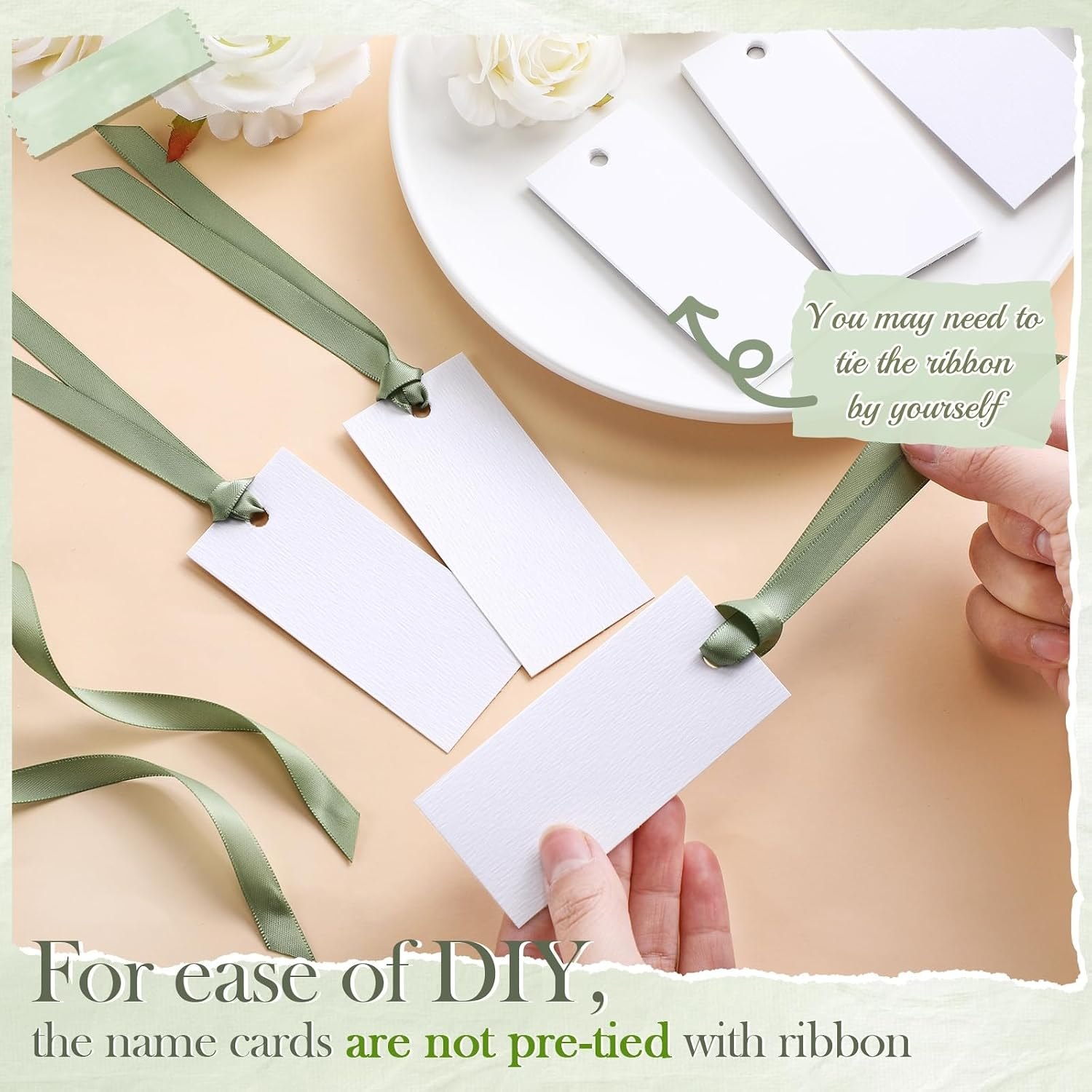
The maker does not confirm that the ribbons arrive attached to the cards. Allow preparation time rather than expecting the set to be ready to place straight from the pack.
Sage green can be part of your table colour plan, but items from different ranges may not match exactly. Compare the ribbons with your other decorations if a close colour match matters to you.
Decide whether the cards mark seats or tables
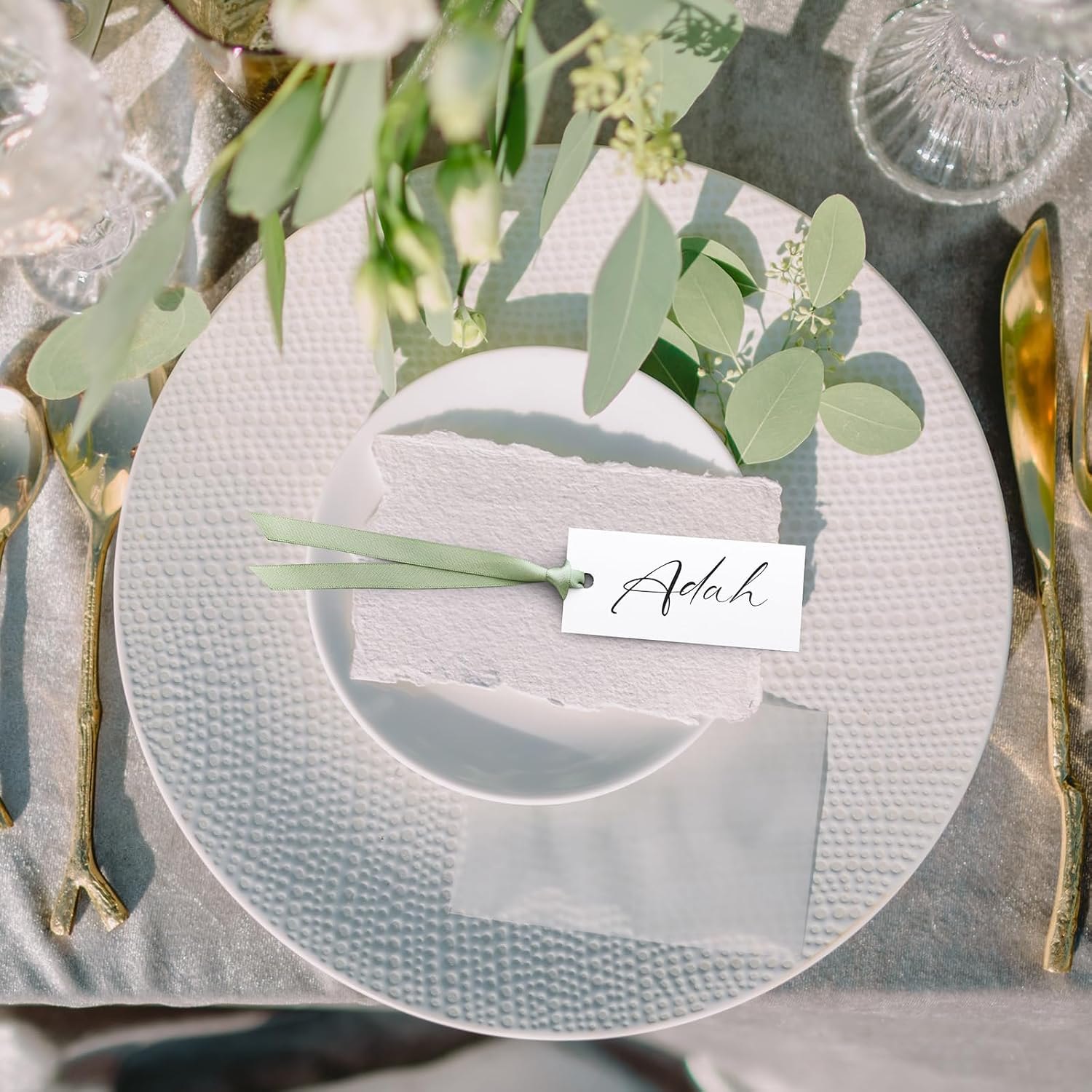
Reception seating cards are most useful when their purpose is clear. A name placed at a seat tells the guest where to sit. A card collected elsewhere may need extra information to tell them where to go.
Think through how guests will use your arrangement. If you want to include both a name and a table number, test that layout within the listed measurements first. There is no stated text capacity.
Keep the wording consistent across the set. Choose whether to use full names, first names or another format, then check the list for duplicates and spelling errors.
A short review before writing can save work later. It is easier to correct the guest list than to replace several finished cards after the seating plan has been passed to someone else.
Use spare cards beyond the seating plan
These cards can also be used as satin ribbon gift tags or for short greetings. That gives you another use for cards left over after the seating names are finished.
For wedding favour tags, decide whether you need a guest name, a short thank-you message or both. Try the wording at the actual card size before settling on it.
If a tagged favour will also mark the guest's seat, check that the name remains easy to see once the ribbon is tied. The decorative part should not cover the information the guest needs.
Dinner party place cards offer another use for the same blank format. You can prepare a smaller set for a meal and store unused cards for another occasion. Keep them dry and flat so they are ready when needed.
Prepare and store the finished set carefully
White paper can show marks from handling. Work on a clean, dry surface and keep food and drinks away while you write.
Allow ink to dry before stacking cards or adding ribbons. The time needed depends on your writing tool, so use your test card as a guide rather than rushing straight into packing.
Once the names are ready, sort the cards in a way that suits the setup. Grouping them by table can help the person placing them follow your seating plan.
Keep a copy of the final list with the stationery. If another person is setting up, explain where each card should go. Clear instructions matter more than a complicated ribbon arrangement.
Store unused cards and ribbons in their original packaging. No waterproof rating is stated, so protect the paper from moisture before and during use.
Allow time for delivery and preparation
Delivery is available within Australia only. We dispatch within 2 working days, and delivery then takes up to 7 working days by tracked courier.
Order well ahead of the wedding date. The delivery period is only one part of your schedule. You also need time to check the pack, test your writing and complete the names.
When the set arrives, check the contents and measurements before starting. This is the right point to confirm that the ribbon colour and card format suit your plan.
Change of mind returns are accepted within 14 days of delivery if the item is unused and in its original packaging. The customer pays return postage. Faulty or damaged items are put right under the Australian Consumer Law.
The short version
Choose these blank wedding place cards if you want white textured paper, sage green satin ribbons and space to add names yourself. The pack includes 50 cards and 50 ribbons, with cards measuring 1.57 x 3.54 inches.
Check your guest count, test a full-size layout and leave time for writing. A clear name, a considered position and a ribbon that fits your arrangement are the details that make the cards useful at the table.